Easy Meal Prep Ideas for the Week: A Practical Guide
Master your schedule with these easy meal prep ideas for the week. Discover efficient strategies to save time, reduce food waste, and eat healthier every day.
Archive of Absolute Clarity is reader-supported. This page may display advertisements served by Google AdSense and other third-party networks. Ads are delivered automatically based on your browsing activity and are not editorial endorsements. We may earn a commission from links to products or services featured in sponsored content. Our editorial coverage is produced independently and is never influenced by advertisers or sponsors. See our Editorial Standards and Privacy Policy for more information.
Mastering the art of meal preparation is the most effective way to reclaim your schedule and ensure you are fueling your body with intention rather than desperation. By dedicating just a few hours during the weekend to assemble your nutrition for the upcoming days, you strip away the daily cognitive load of deciding what to eat. This guide offers a framework for streamlined preparation that focuses on versatility, flavor, and long-term sustainability.
The Philosophy of Batch Component Cooking
Instead of preparing fully assembled recipes that might get soggy, focus on batch-cooking fundamental components. Roast two large sheet pans of varied vegetables such as broccoli, sweet potatoes, and cauliflower, which serve as a base for dozens of meals. Simultaneously, prepare a large batch of grains like quinoa, farro, or brown rice to provide a solid foundation for your lunches.
By cooking individual elements rather than complete meals, you retain the ability to customize your flavors each day. You can take the same roasted sweet potato and pair it with black beans and lime for a Mexican-inspired bowl on Monday, then toss it with tahini and chickpeas for a Mediterranean flavor profile on Wednesday. This method prevents the dreaded 'meal prep fatigue' that occurs when eating identical pre-packaged lunches for five days straight.
Component cooking is the secret to culinary freedom. It allows you to build meals that feel fresh rather than reheated, transforming your leftovers into an entirely new dining experience.
Essential Equipment for Efficient Prep
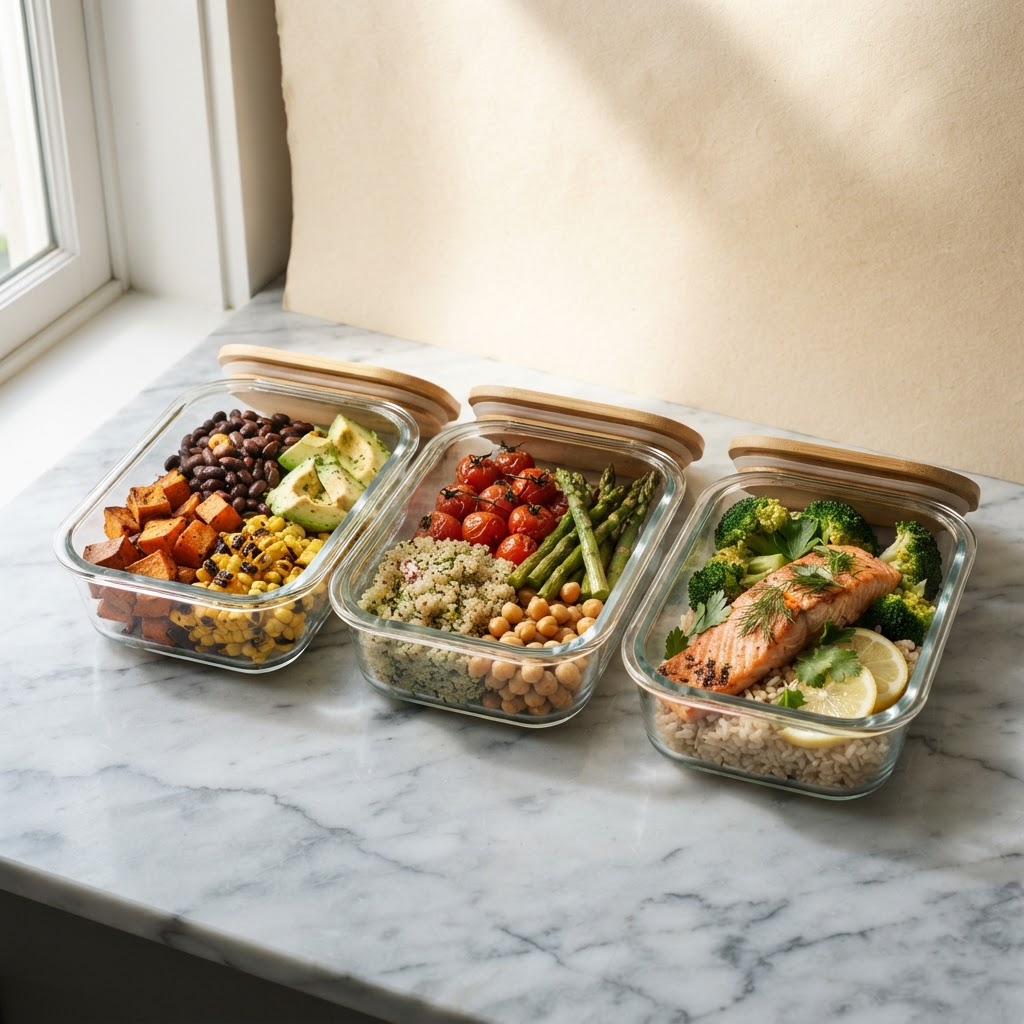
Investing in high-quality glass storage containers is non-negotiable for serious meal preppers. Glass does not stain, retains odors less than plastic, and can go straight from the refrigerator to the oven or microwave without leaching chemicals. Ensure you have a mix of sizes, including smaller containers for dressings and larger ones for bulk salads or main proteins.
Beyond storage, having a sharp chef's knife and a large wooden cutting board will drastically reduce your prep time. When your tools are efficient, the physical labor of chopping vegetables becomes a meditative process rather than a chore. Consider a digital food scale to ensure your portion sizes remain consistent throughout the week, which is crucial for tracking nutrition goals effectively.
Finally, a high-speed blender or food processor is an invaluable asset for creating versatile sauces and dips. Making your own dressings or hummus takes less than five minutes and eliminates the preservatives and added sugars found in store-bought varieties. A well-stocked toolset is the foundation upon which all successful kitchen routines are built.
The Power of Protein Versatility
When planning your week, start with your protein source as the anchor of each meal. Baking a large tray of chicken thighs, searing a block of firm tofu, or poaching white fish provides the building blocks for high-protein sustenance. If you prefer variety, rotate your cooking methods: bake one batch, slow-cook another, and pan-sear a third to offer different textures.
Remember that shredded proteins are the most versatile for quick assembly. Shredded chicken can be folded into tortillas, stirred into soups, or tossed over leafy greens with minimal effort. Investing in a slow cooker or pressure cooker allows you to cook three pounds of meat while you handle other household tasks, maximizing your time efficiency.
Keep a list of quick protein sources that require zero cooking for those days when you are behind schedule. Canned chickpeas, tuna, hard-boiled eggs, and pre-cooked rotisserie chicken are excellent backups. These items bridge the gap between a planned meal and an emergency snack, ensuring you never resort to processed fast food.
Mastering the Art of the Sauce
Sauces are the difference between a bland, repetitive diet and a vibrant, culinary-inspired routine. A simple lemon-tahini dressing, a spicy peanut sauce, or a classic chimichurri can completely change the flavor profile of your component-cooked meals. Devote twenty minutes during your prep session to whisking together at least two distinct sauces that can be used on different dishes.
Store these sauces in airtight jars, clearly labeled with the date of creation. A high-quality dressing will last for up to five days in the refrigerator if stored correctly. By having a pre-made dressing ready to pour, you ensure that even your simplest salad or grain bowl feels like a restaurant-quality meal.
Consider these three staples for your weekly rotation:
- Lemon-Tahini Dressing: Tahini, lemon juice, garlic, and a splash of warm water.
- Spicy Peanut Sauce: Peanut butter, soy sauce, lime juice, ginger, and Sriracha.
- Cilantro-Lime Vinaigrette: Fresh cilantro, olive oil, lime juice, honey, and a pinch of cumin.
Strategies for Keeping Greens Fresh
One of the biggest complaints regarding meal prep is that fresh produce loses its texture. To mitigate this, store your greens in a large container with a paper towel at the bottom to absorb excess moisture. This simple trick can extend the life of spinach, kale, and arugula by several days compared to leaving them in their original packaging.
For salads specifically, keep your dressing separate until the moment of consumption. Invest in small, leak-proof silicone pods that fit inside your main container. This separation is the golden rule of meal prep; even the freshest leaves will wilt within hours if they are sitting in a pool of dressing inside your fridge.
If you prefer sturdy salads, build them in jars by layering the dressing at the very bottom, followed by firm vegetables like cucumbers or peppers, then the protein, and finally the greens at the very top. When you are ready to eat, flip the jar into a bowl and watch as the dressing coats everything perfectly, keeping the leaves crisp and fresh.
Balancing Nutrition Through Macros
To ensure your meal prep supports your health goals, aim for a consistent balance of macronutrients in every container. A reliable formula is to include one portion of lean protein, a complex carbohydrate, a significant serving of fiber-rich vegetables, and a source of healthy fats. This ratio promotes satiety and prevents blood sugar spikes that lead to afternoon crashes.
Track your progress using a simple journal or an app if you are targeting specific caloric or nutritional goals. However, avoid overcomplicating the math; for most people, visual portions are sufficient. Aim for a plate structure that is one-half vegetables, one-quarter protein, and one-quarter whole grains or starchy vegetables.
True health is not found in deprivation, but in the consistent choice of nutrient-dense ingredients prepared with care. By pre-planning your macros, you remove the guesswork from your daily intake.
Time-Saving Breakfast Hacks
Breakfast is often the most neglected meal due to morning time constraints. Overnight oats are the ultimate 'set it and forget it' solution. By mixing rolled oats, chia seeds, your choice of milk, and fruit in a jar the night before—or even Sunday evening for the week—you guarantee a fiber-rich start to your day.
Another high-impact strategy is to prepare a large batch of egg muffins using a muffin tin. Crack eggs, whisk them with chopped spinach, mushrooms, and feta, and bake at 350 degrees Fahrenheit for 20 minutes. These mini-frittatas can be frozen and popped into the microwave for 45 seconds, providing a portable, protein-dense breakfast.
Do not underestimate the power of smoothies for busy mornings. Bag up your frozen fruit, greens, and protein powder into individual freezer bags. When you are ready, simply dump the contents into the blender with your liquid of choice and go, eliminating the need to measure out ingredients every single morning.
Managing Food Waste and Storage
Food waste is the hidden enemy of both your wallet and your efficiency. Shop your pantry before heading to the store; you will be surprised how many grains or legumes are already waiting to be used. Plan your meals around items that are about to expire to ensure your kitchen inventory remains fluid.
Freezer management is equally vital. If you find you have cooked too much, freeze half of your batch immediately rather than forcing yourself to eat it for seven days straight. Label all frozen containers with the contents and the date so you can rotate your inventory effectively. A well-managed freezer is essentially an insurance policy against busy weeks where you have no time to cook.
Consider these storage timelines for safety:
- Cooked Grains: 4-5 days in the fridge, 3 months in the freezer.
- Roasted Vegetables: 3-4 days in the fridge.
- Shredded Cooked Meat: 3-4 days in the fridge, 2 months in the freezer.
- Fresh Salads: 2-3 days in the fridge without dressing.
Maintaining Consistency Over Time
Consistency is not about perfection; it is about establishing a routine that fits your lifestyle. Start small by prepping only your lunches for three days a week. Once you master that rhythm, expand your efforts to include breakfasts or full weekday dinner planning. The goal is to build a habit that feels sustainable rather than an overwhelming burden.
If you have a particularly busy week, allow yourself to use 'shortcut' ingredients like pre-washed lettuce bags or pre-cooked lentils. Being flexible ensures that you don't abandon your healthy eating habits entirely just because you didn't have time for a full prep session. The '80/20 rule'—where 80 percent of your meals are prepped and 20 percent are flexible—is often the most realistic approach for long-term success.
Reflect on your results at the end of each month. What did you enjoy eating? Which meals went uneaten? Adjust your strategy accordingly so that your meal prep evolves alongside your changing tastes and schedule. By viewing meal prep as an iterative process, you ensure that your kitchen remains a place of joy rather than a source of stress.
Frequently Asked Questions
Dr. James Okonkwo
Health Editor · Archive of Absolute Clarity
Dr. James Okonkwo, MD, MPH, is a board-certified physician and public-health researcher who writes about evidence-based health, fitness, and nutrition. He holds medical and public-health degrees and has practiced in both clinical and community settings. His dispatches prioritize peer-reviewed evidence and clearly distinguish established consensus from emerging research.
- MD, board-certified physician
- MPH, public health
- Clinical and community practice
Expertise: Evidence-based health · Nutrition · Fitness · Preventive medicine